

News Briefing
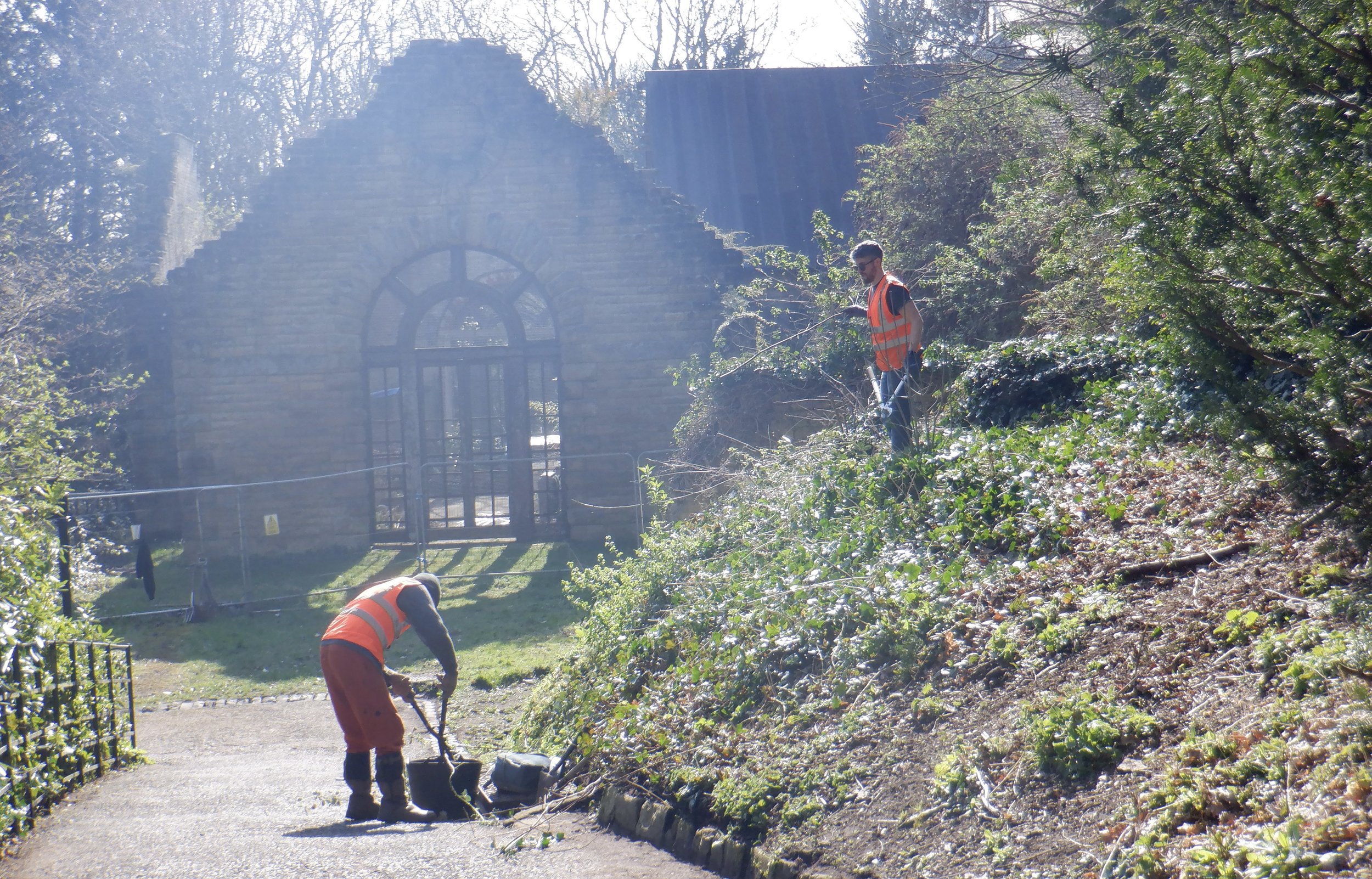
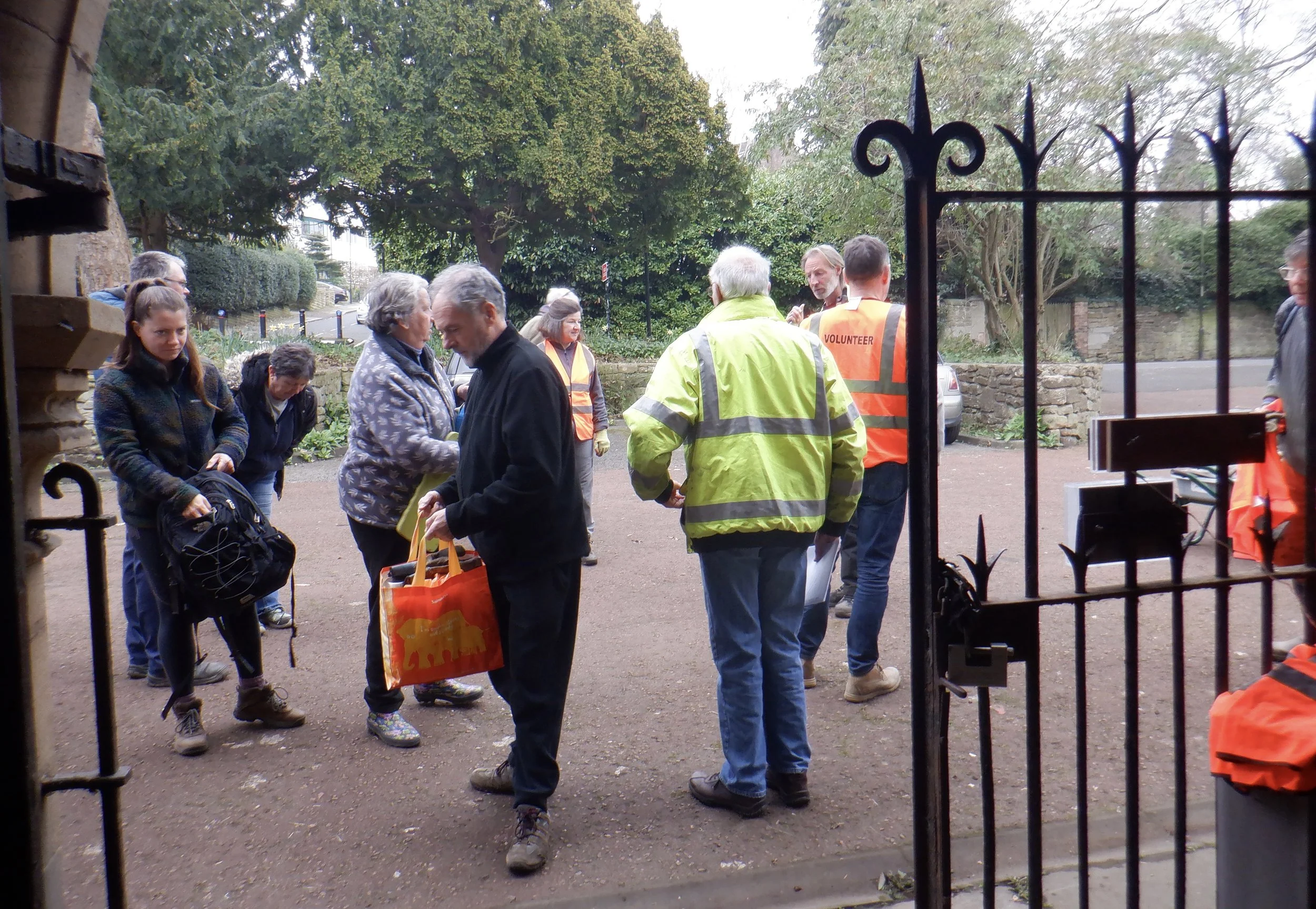
With spring flowers blooming in Jesmond Dene, groups of volunteers gathered at the end of March to clear vegetation from the Banqueting Hall site and open up vistas around the building.
‘It was a very successful weekend and we achieved a great deal thanks to the enthusiasm of the volunteers,’ said Peter Jamieson of The Armstrong Project, who arranged the working party in collaboration with Armstrong Studio Trust and members of the NCC Parks team.
It was the third such event to take place in the past year, with more to come.
Refreshments and photographs courtesy of Armstrong Studio Trust.
Vegetation cleared to open up vistas around the Hall

Reece and Barbour join the AHF in championing The Armstrong Project
Reece Foundation and Barbour Foundation have joined the Architectural Heritage Fund in sponsoring initial survey work and feasibility studies for the restoration of Jesmond Dene Banqueting Hall.
A structural survey has already been carried out by Blackett-Ord Conservation Engineering. This will be followed by a condition survey, a measured survey and a topographical survey, in preparation for grant applications to public funding bodies.
Work on The Armstrong Project got under way in spring 2025, when a large volunteer group spent a weekend clearing a huge amount of vegetation from around Jesmond Dene Banqueting Hall, under the guidance of project trustees Peter Jamieson and Maxine Webster, in collaboration with Newcastle Council. The aim was to prepare the way for building surveys and assessment of any urgent repairs. Read David Whetstone’s account in Cultured.North East.
A second, equally successful working party took place on the weekend of 25–26 October, again in concert with the city council. This time, the focus was on the area around the Norman Shaw Gatehouse and the approaches to the Banqueting Hall.
Sarah Capes, NCC estate manager, said afterwards: ‘The view and surrounding area to the Gatehouse looks great and visible as you approach from the north of Jesmond Dene Road. Thank you to all the volunteers.’
Among many exciting proposals is the transformation of the Norman Shaw Lodge into a visitor centre, where adults and children can learn about the history and heritage of the area and the amazing achievements of the giants of science and industry who epitomised the glory of Tyneside in the 19th century.
The Dobson Hall on the riverbank will be a place accessible to everyone for public events and entertainment, while other parts of the building will include classrooms and studios for training and practice of all sorts of skills, combining arts and engineering.

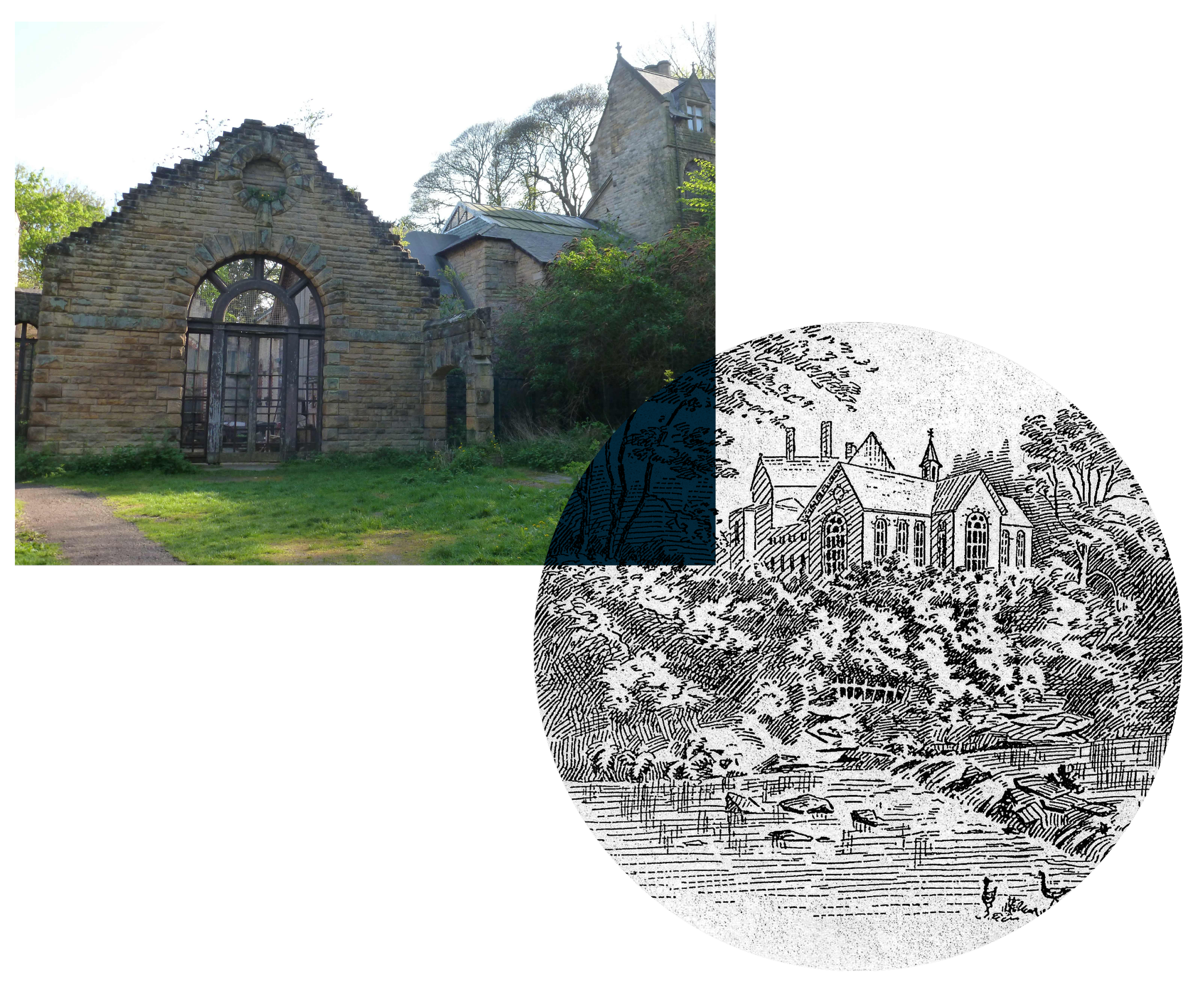
Two images of the Banqueting Hall – as it appears today, and as it appeared in the 1880s, when it was gifted to the people of Newcastle.



In 2025 the Lit & Phil – the Literary and Philosophical Society of Newcastle upon Tyne – celebrates 200 years in its elegant neoclassical building on Westgate Road with an array of talks, concerts and other events.
One of its two longest-serving presidents was Sir William Armstrong – Lord Armstrong, as he became in 1887 – who sat in the presidential chair from 1860 until his death in 1900. (The other was Sir John Swinburne, who served from 1798 to 1838.) Other past presidents included Robert Stephenson, Charles Parsons and Joseph Swan.
The society was founded in 1793, at the time of the French Revolution, and was regarded by some as a subversive organisation. One of its earliest members was William Armstrong senior, Lord Armstrong’s father, who had recently arrived in Newcastle from the village of Wreay, near Carlisle, where his own father worked as a shoemaker. It moved into its current building in 1825.
On 21 July 2025, in an event to mark the bicentenary, Henrietta Heald gave a lecture in the society’s famous library, the largest independent library outside London, on ‘The Armstrongs and the Lit & Phil: a Century of Progress’.
A glorious bicentenary

The building of the Literary & Philosophical Society in Westgate Road, Newcastle, opened in 1825. William Armstrong, seen here in his characteristic ‘brainwave’ pose, was president of the society for 40 years, from 1860 to 1900.

One of five casts of the Elgin Marbles adorning the Lit & Phil’s entrance hall.
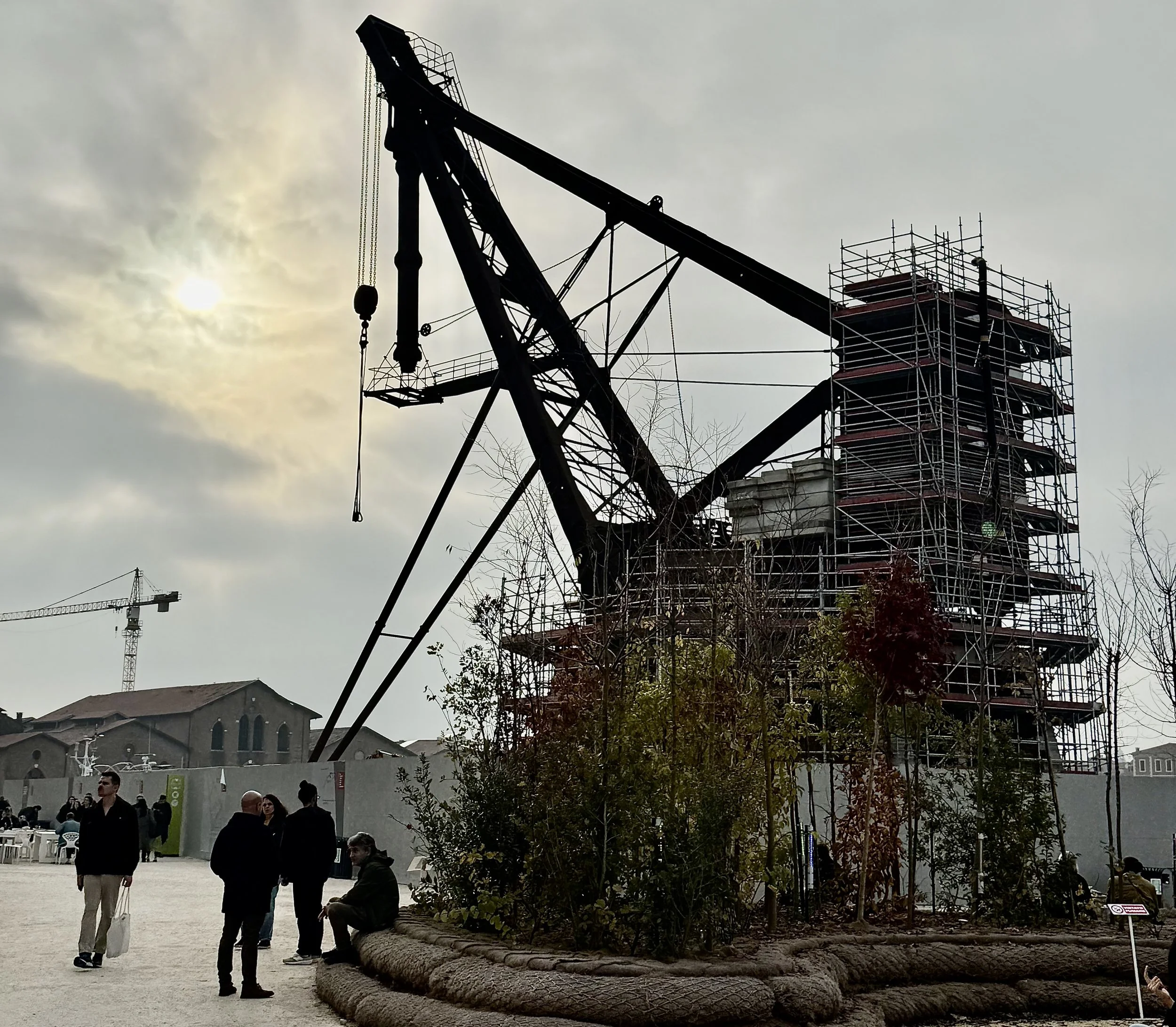
The Armstrong Mitchell crane in the Venice Arsenale is the only surviving example of eight giant cranes built around the world in the 1880s by the Tyneside company for the loading and unloading of warships. A similar crane once stood at La Spezia, on Italy’s northwest coast.
As Henrietta Heald explained at a recent gathering of the Circolo Italo-Britannico in Venice, the crane is an important relic of the thriving industrial relationship that existed in the 19th century between Italy and Britain, cemented in the 1860s, at the time of Italian unification.
William Armstrong and his colleague James Meadows Rendel both visited Italy to advise on the construction and use of hydraulic machinery in naval dockyards, and Armstrong later built ships on the Tyne for the new Italian navy. A branch of the Armstrong firm was established at Posillipo on the Bay of Naples and managed by James Rendel’s son George.
The Arsenale crane was adopted as a restoration project by the British charity Venice in Peril, which reinforced the ballast box to stabilise it, and paid for research and analysis which led to a full-scale restoration programme drawn up by the Venice Soprintendenza. Work got under way in summer 2025 under the auspices of the Venice Biennale, paid for with European funds designated by Rome.
For more Venice connections, see The Armstrong Project.
A monument to British engineering in Venice
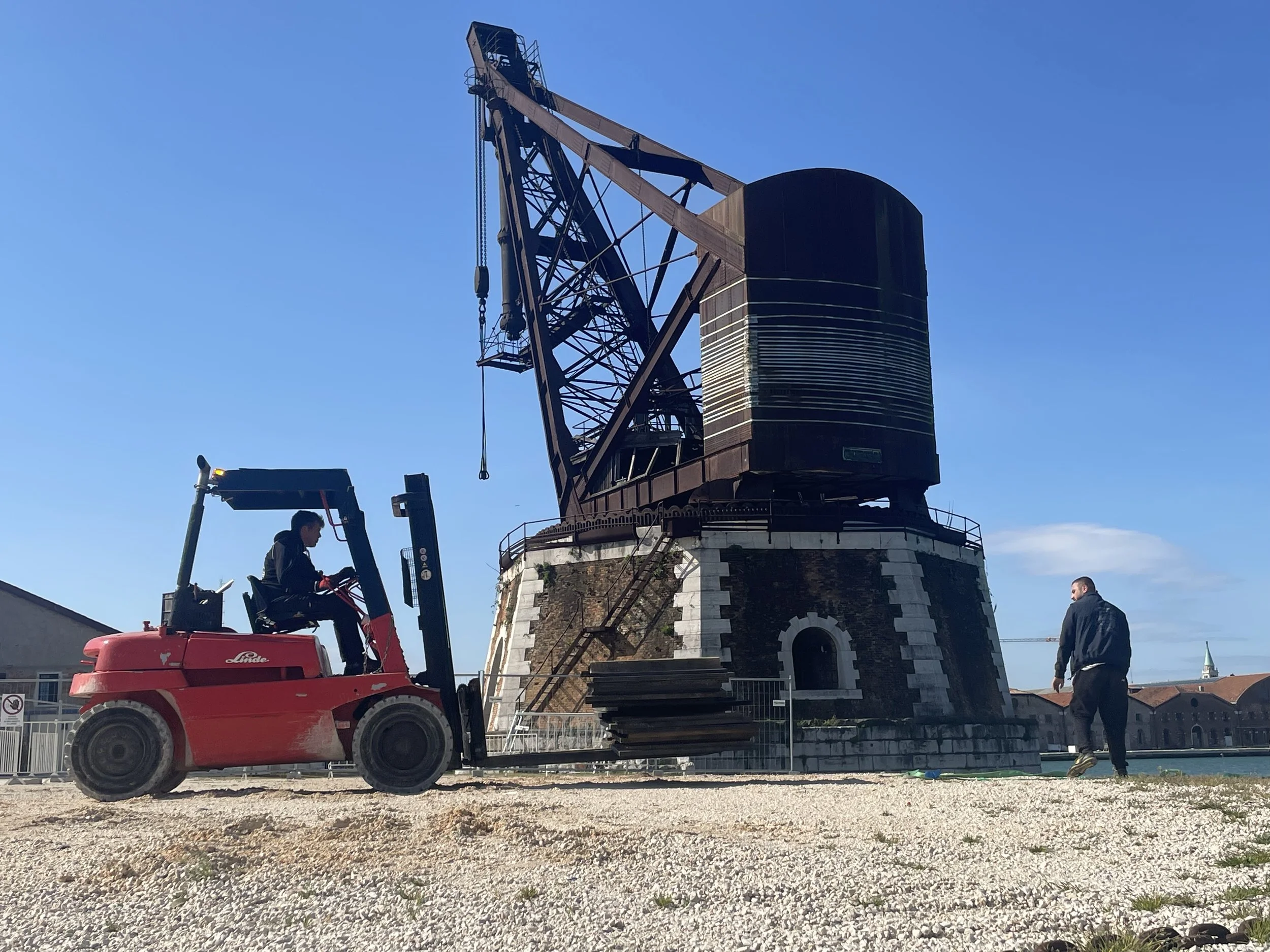
Work has begun to restore the Armstrong Mitchell crane in the Venice Arsenale. (Scaffolding photo by Andrew Ballantyne)